Hadrien Cornier / Personal notes
Robotics, learning,
and the systems
behind them.
I build data infrastructure and production ML. Here I write about robot learning, the math behind it, and what I learn by building.
Test different policies.
Pick a policy. Move a cube. See what changes.
Ready to follow a fixed path.
0.0 sWhy it failed
Predicted futures
Compare possible routes Model predictions
About this approach
Hand-written replay baseline
Saved route → tracking controller → movement
A fixed script follows a saved route. New observations do not change its commands.
Expect It works when the scene matches the taught route.
Watch for A moved cube or new obstacle can break the task.
Hand-written baseline. No learned model.Diffusion is a way to generate actions. Pretraining is prior learning. A model can use both.
- Action generation
- Saved waypoints.
- Training
- No learned model.
Replay the same commands. Moving the target leaves the route unchanged.
Experiment settings
Saved commands run without a new planning step.
Start with the unchanged scene, then try a failure.
- Plan updates
- 0
- Waiting
- 0.0 s
What this shows
One arm, one speed, one scene. The learned methods are represented by simple rules. These runs illustrate mechanisms and failure causes. The arm drawing follows the gripper. Gripper contact decides collisions; the links are a visual sketch.
Diffusion describes how actions are generated. Pretraining describes what the model learned before this task. π₀ combines a pretrained vision-language model with a flow-based action expert. These ideas can be combined.
Execution timing is a separate choice. The RTC paper overlaps computation with motion for diffusion and flow policies. This toy also applies that timing idea to the action-transformer sketch.
The blue path marks commands that are already committed. New observations still take time to change movement.
Challenges introduce specific toy errors: a moving target, a sudden blocker, swapped visual labels, or wrong camera coordinates. Grasping, collisions, and the real cube identity decide the result.
The action-transformer, diffusion, and world-model sketches are set to the red-cube task. The VLA sketch also reads the red/blue instruction.
Papers and their limits: ACT, real-time chunking, Diffusion Policy, π₀, V-JEPA 2-AC.
Essays & explorations
Writing
10 essays
Series / 6 parts
From policy to action: the last mile of robotics control
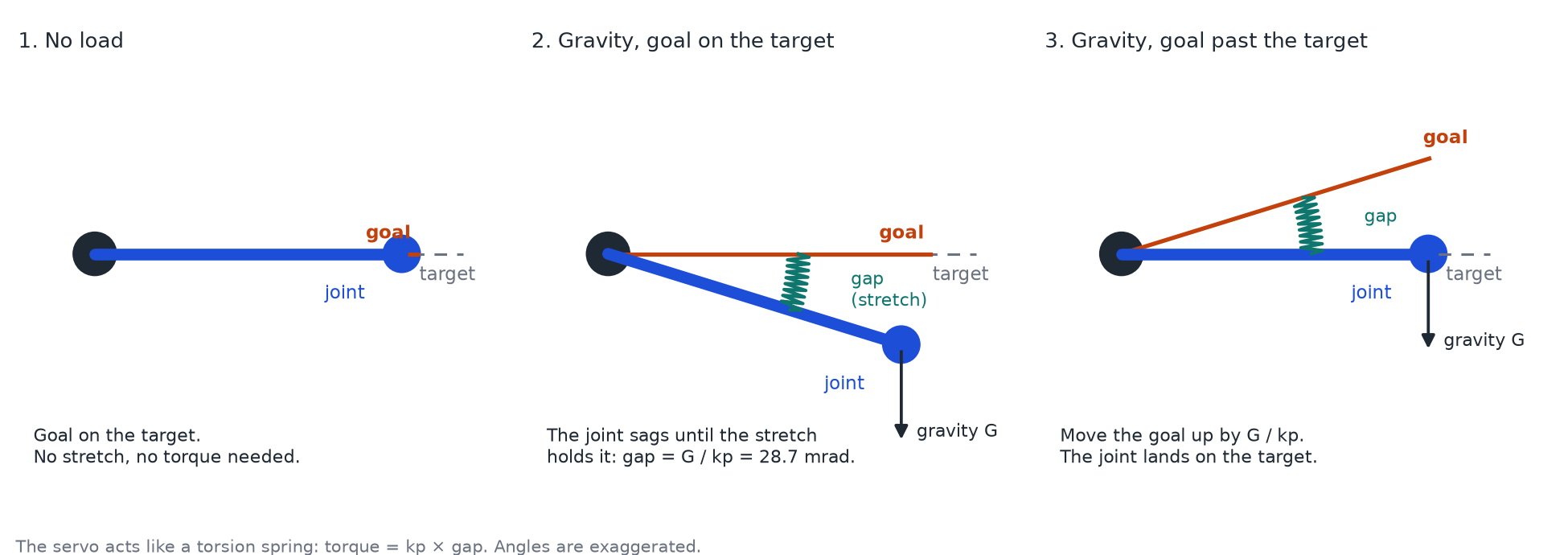
One equation, and every way the arm misses it
Start from torque = inertia × acceleration, then add each term a cheap servo arm really has: gravity, friction, a payload, dead time, a dead band. Each term is one way the arm misses its target.
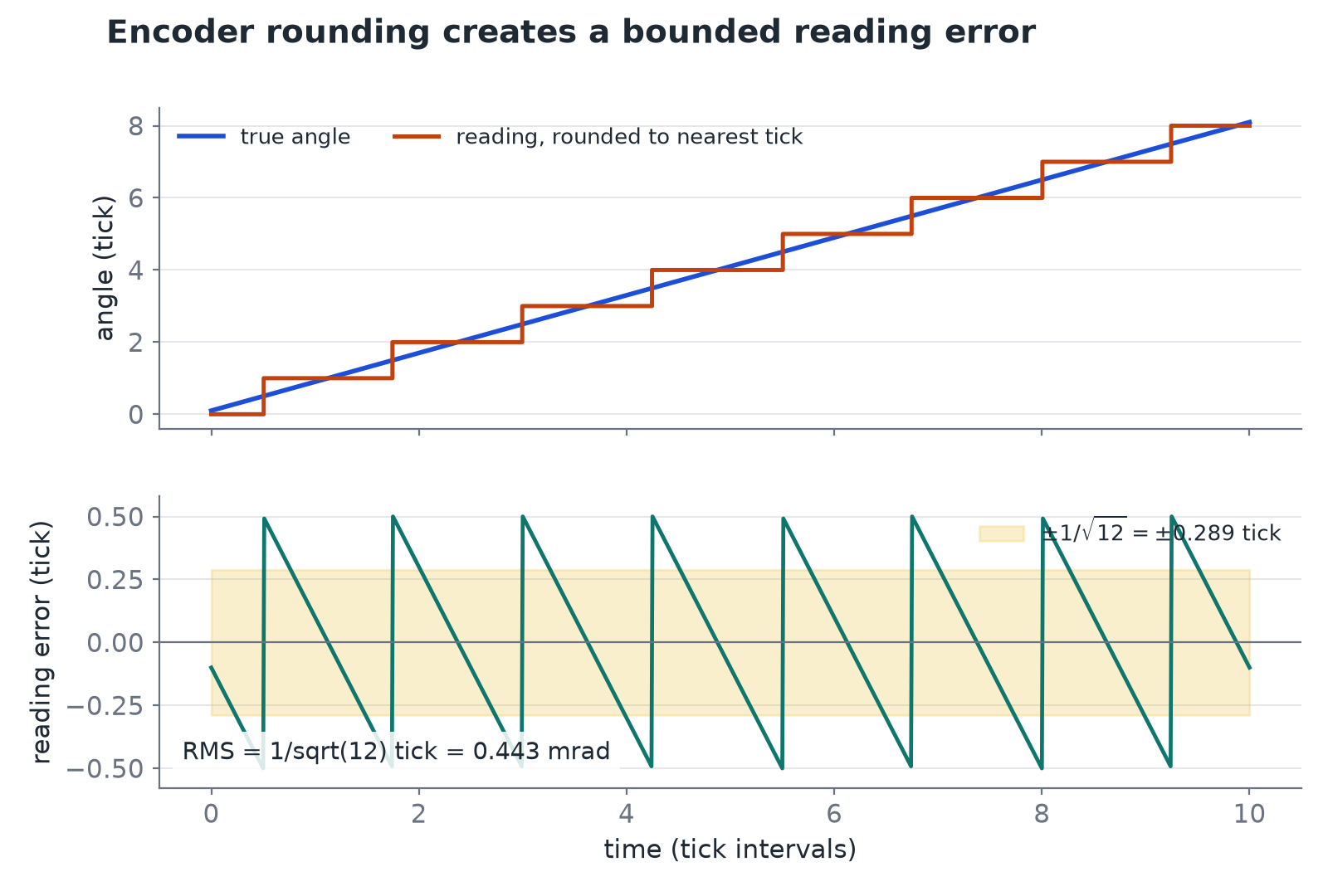
Seeing finer than the sensor
The sensor side of the joint equation: why differences of encoder ticks explode the noise, and how an observer or a Kalman filter can estimate an angle finer than one tick.
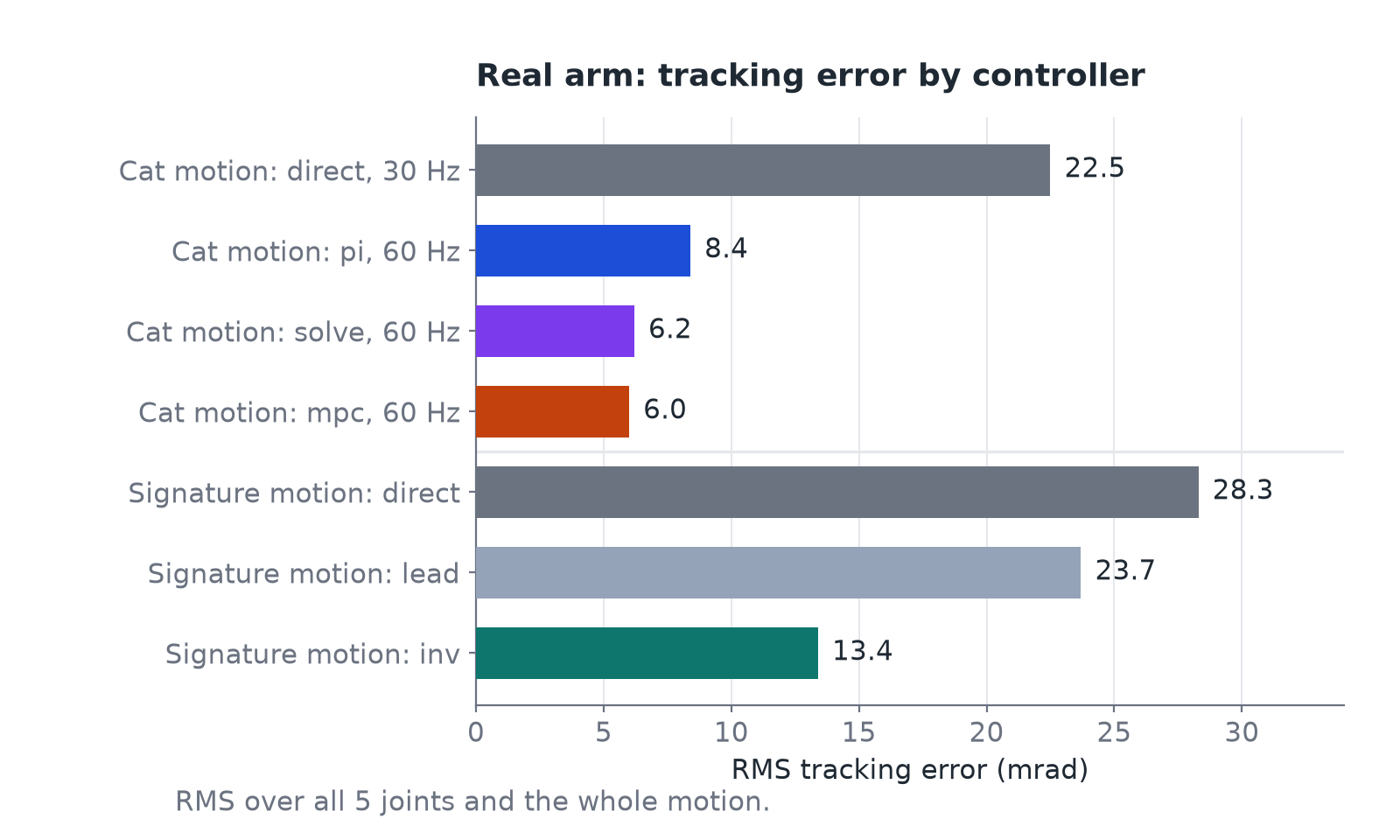
Six ways to choose the goal
One general formula for the goal sent to a servo. Every controller I built, from a plain look-ahead to MPC, is that formula with some terms set to zero.
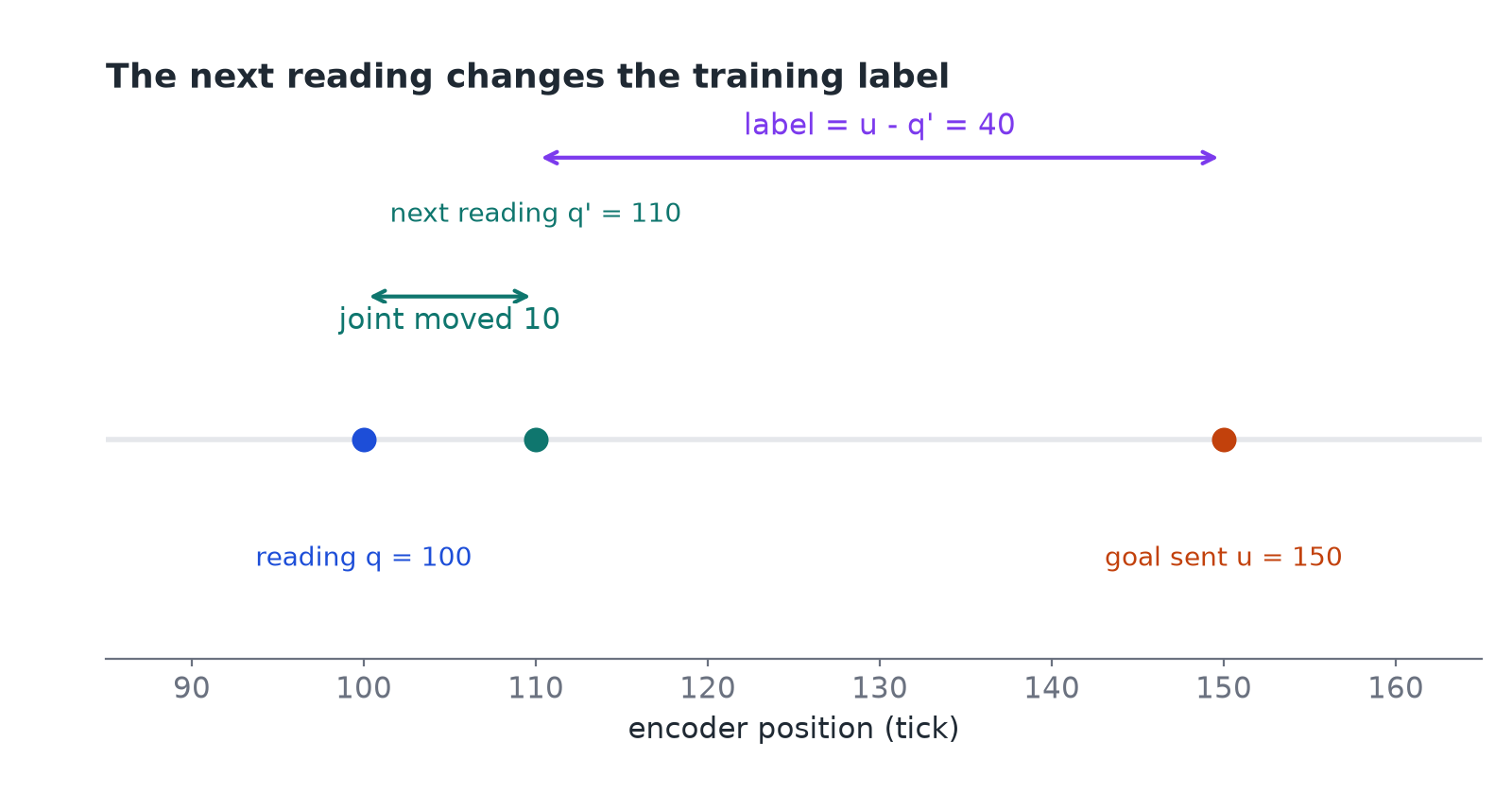
Learning what the physics misses
Where a neural network fits in a robot controller. A network that learns only what the physics model gets wrong does the same job as a Kalman disturbance estimate, with more freedom, and this is where recent research is going.
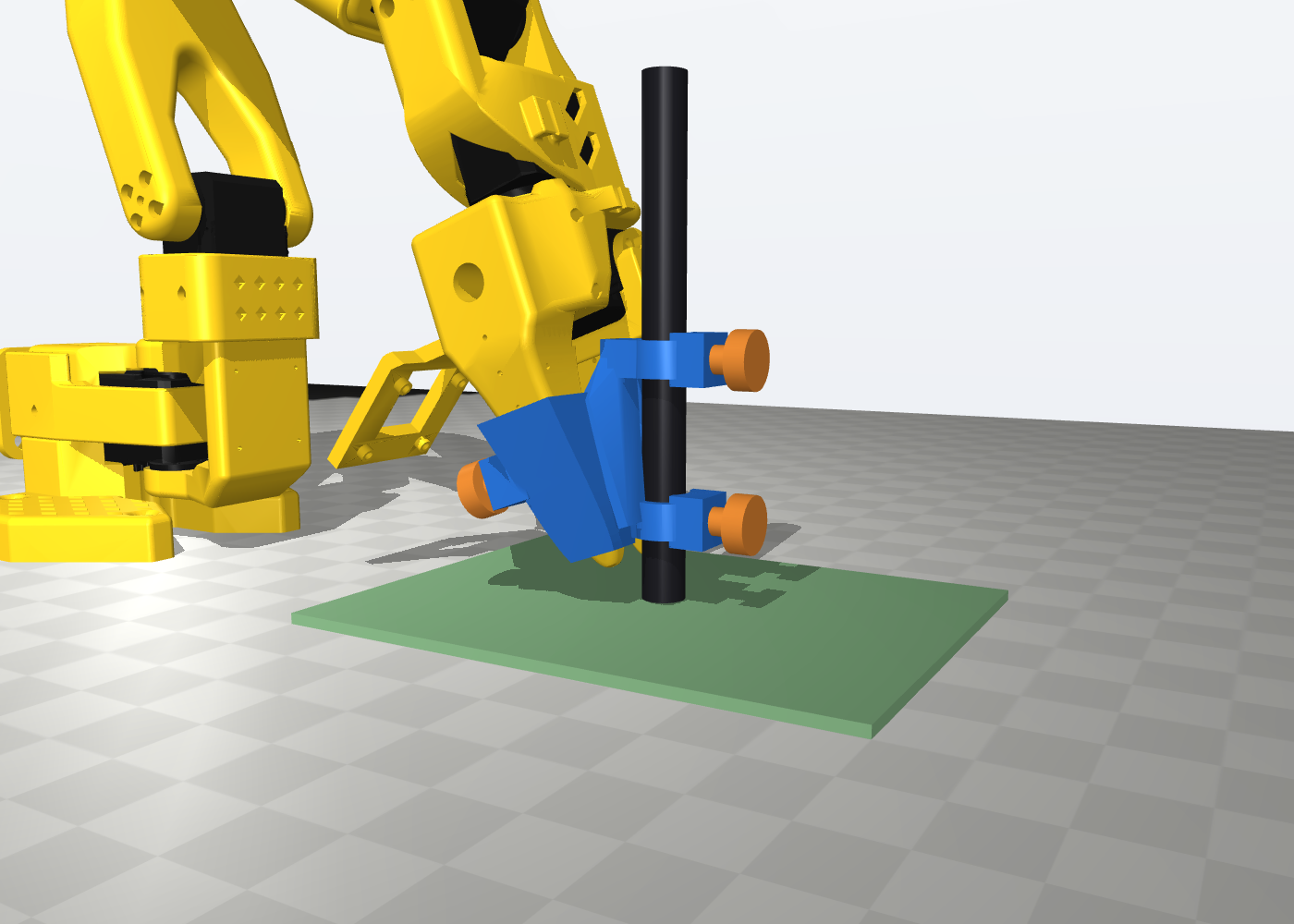
A pen holder that shows the arm’s error, not its own
I want to see my SO-101 trajectory errors as ink on paper. For that, the pen must not add an error of its own. I made five holder designs. The one I release is a printed sleeve that slides onto the stock gripper: 4 printed parts, nothing to buy, any pen from 8 to 13 mm.
Where the last millimeter of my drawing arm goes
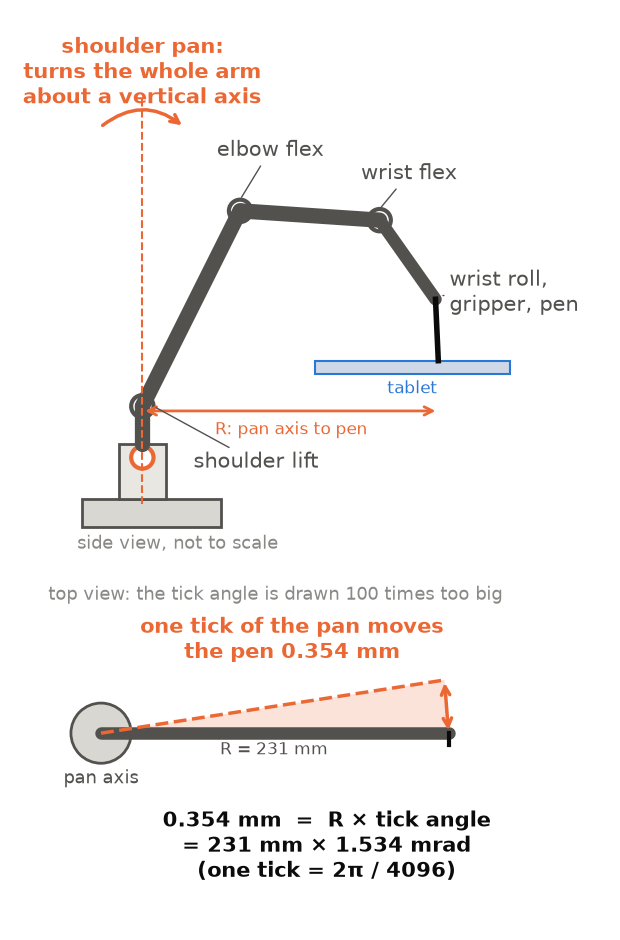
My SO-101 arm cannot see its own pen tip. A tablet can. Here is what the tablet showed: how much error a learned correction removes, which causes are left, and why the base joint matters most.
Other essays
01A few predictions about robotics
If intelligence keeps getting cheaper, the robotics industry may start to look more like a combination of AI infrastructure, industrial services, and manufacturing.
How robot control is changing
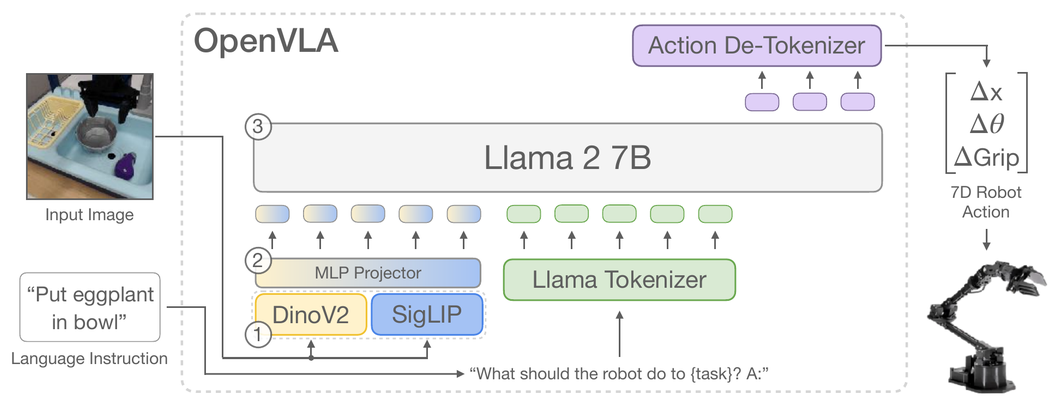
From copying a person to practicing and imagining: how a robot chooses its next movement in 2026, and what is still missing.

Why I am learning robotics
The most impressive robots of the last decade stayed in videos because they could not generalize. Language models changed that, and robotics now looks like language models in 2019.
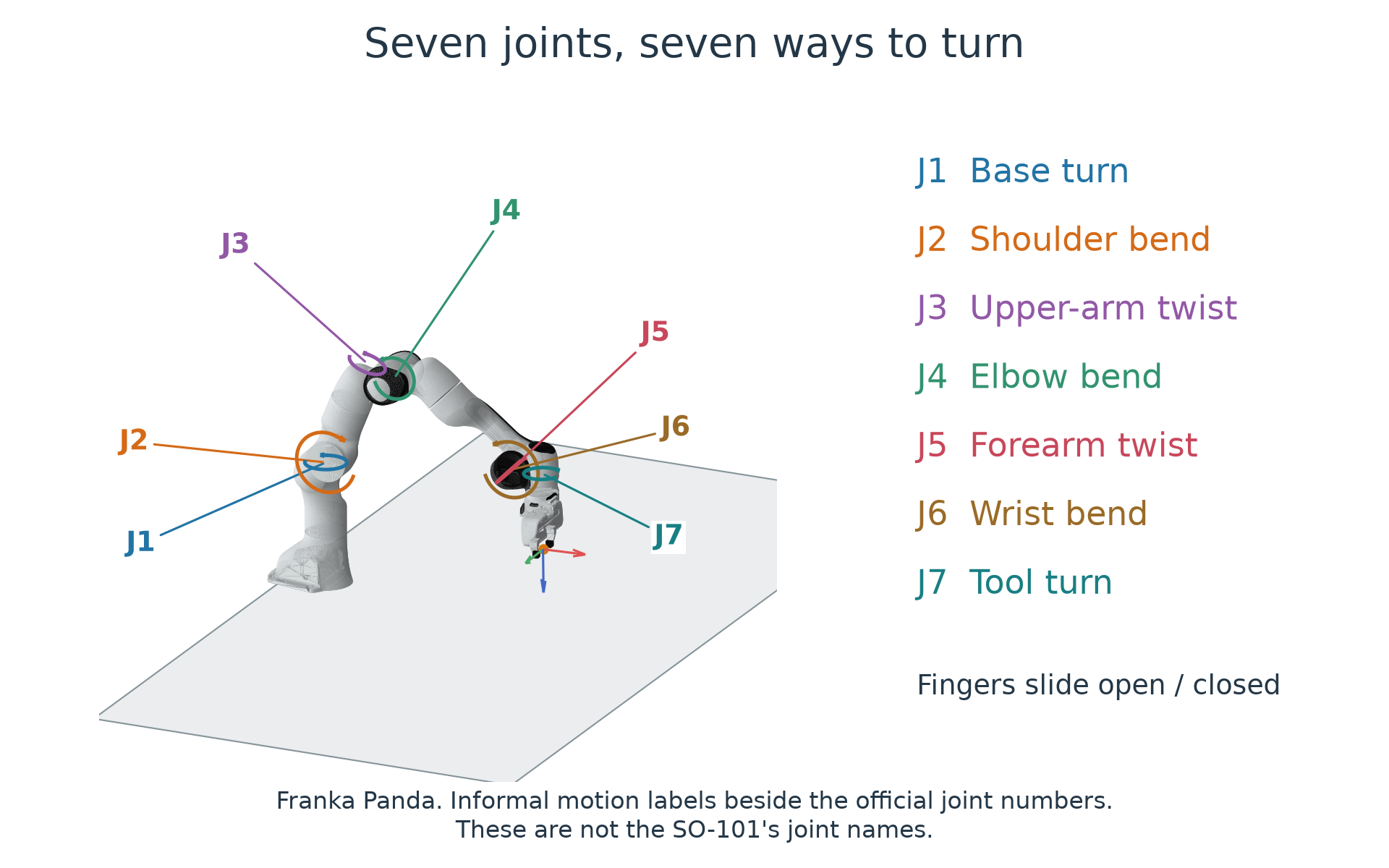
How an arm moves: joints, geometry, and motor control
From encoder readings to gripper position: a visual guide to robot geometry, servos, and the commands that connect them.
Research in motion
Papers
Visual explanation
EigenDEXplore
Human motion guides its experiments. Every joint stays free.
Beyond robotics
Notes on the work.
Short notes on engineering, hiring, and building things that matter.
All notesOutside robotics
Projects
Culture Calendar
A calendar of film, classical music, opera, ballet, book clubs, and visual arts in Austin.
A little context
About me.
Engineering manager at Talroo, based in Austin. I work on data infrastructure, production ML, and teams. Outside work, I’m learning robotics through experiments with simulation and an SO-101 arm.